Before anything else, one correction that saves a lot of wasted cutting: pruning does not make a spider plant bushier.
That advice gets copied across from shrubs and vining plants, where cutting a stem makes it branch into two. Spider plants do not work that way, and following it just leaves you with a smaller plant.
Why Cutting Does Not Make It Fuller
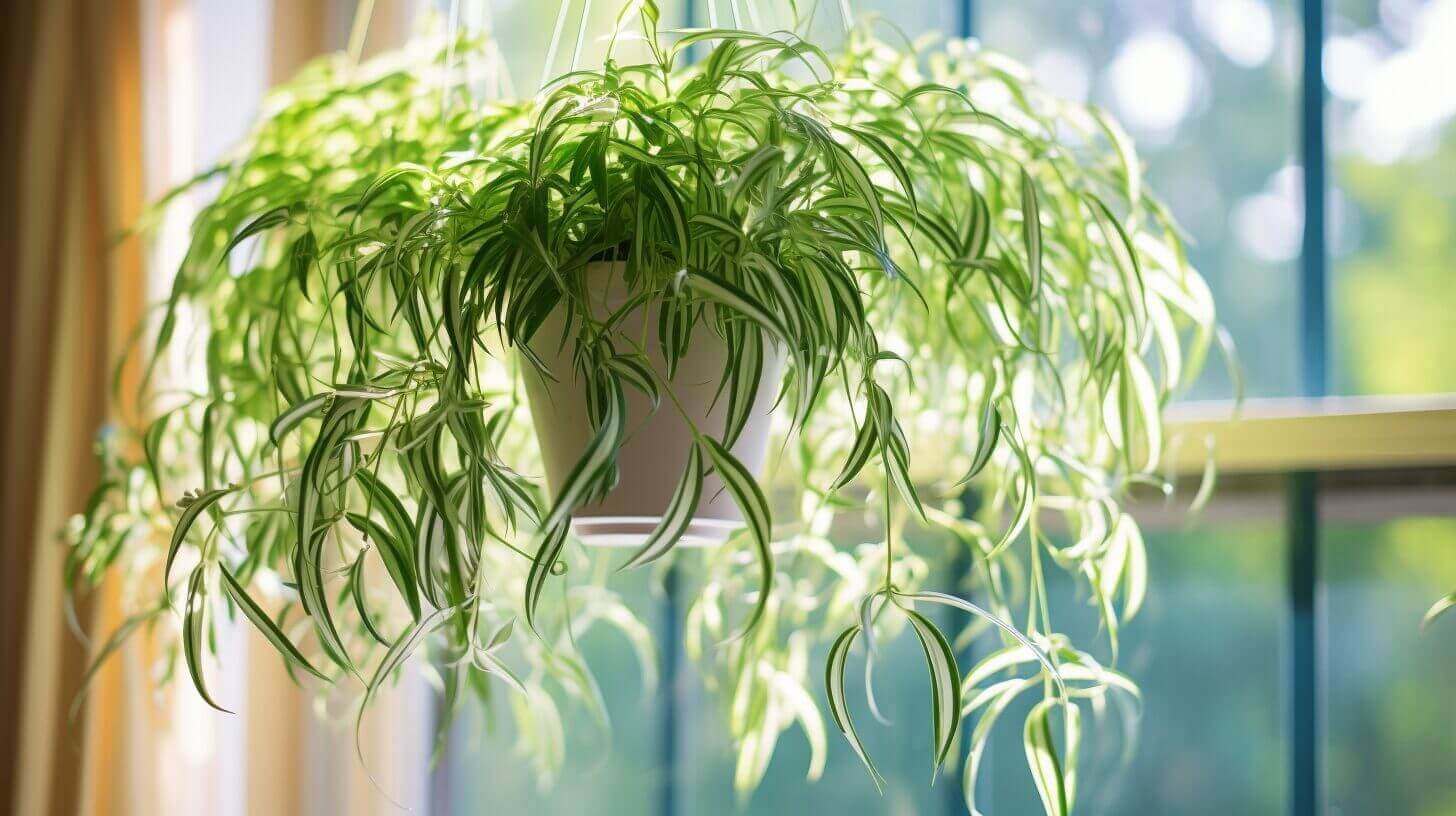
A spider plant grows as a rosette. Every leaf emerges from a central crown at soil level and grows outward, and there are no side buds along a leaf that could be triggered into branching.
So when you cut a spider plant leaf, you get one shorter leaf. You do not get two. The plant carries on producing new leaves from the middle at whatever rate its light and water allow, entirely unaffected by what you did with the scissors.
Fullness in a spider plant comes from more crowns, not more cuts. That is the whole thing. A pot with three or four plants in it looks lush immediately. A single plant pruned repeatedly just looks like a single plant with shorter leaves.
What Pruning Is Actually For
It still has a job, just not that one:
- Removing dead or browning leaves, which tidies the plant and lets you see new problems clearly.
- Cutting off the runners, which redirects a genuine amount of energy back into the parent.
- Trimming brown tips, cosmetic only.
- Taking plantlets to make more plants, which is the real route to a fuller pot.
That second one is the most underrated. A spider plant throwing out half a dozen runners is spending serious resources on them, and every plantlet is being fed by the parent. Cut the runners at the base and that energy goes into leaves instead. If you want a bigger, denser parent plant, this does more than any amount of leaf trimming.

How to Actually Get a Fuller Plant
- Pot several plants together. Three or four plantlets in one pot is how nurseries produce the full specimens you see in shops. It is not one plant that grew well, it is several planted together.
- Root the plantlets it already made. They come free and they root readily. Our guide to what to do with spider plant babies covers the process.
- Give it more light. Bright indirect light produces more leaves and tighter spacing between them. A spider plant in a dim corner grows sparse and floppy, and no pruning fixes that.
- Cut the runners while it establishes if the parent is young or recovering, then let it flower once it is dense.
- Divide an old plant. A congested clump can be split into several crowns and replanted together, which resets a tired plant and fills the pot.

How to Prune One
- Use clean, sharp scissors. Spider plant leaves are fibrous and blunt blades crush rather than cut.
- Cut dead or yellow leaves right at the base, as close to the crown as you can get without nicking neighboring leaves. Leaving stubs looks worse than leaving the leaf.
- For brown tips, cut following the natural taper of the leaf rather than straight across. A blunt cut reads as damage and a tapered one is almost invisible.
- Cut runners at the base of the stem where it leaves the crown.
- Do not remove more than about a third of the foliage at once.
When to Do It
Dead and damaged leaves can come off whenever you notice them, in any season. There is no reason to leave a brown leaf on the plant.
Anything more substantial, like dividing or a heavy tidy-up, is best in spring or early summer when the plant is growing and recovers quickly. Heavy pruning in midwinter leaves it looking thin for months, since it will not replace those leaves until growth picks up.
Frequently Asked Questions
Will pruning make my spider plant grow more leaves?
No. New leaves come from the central crown regardless of pruning. Removing runners frees up energy that can go into leaves, but cutting leaves themselves does not trigger new ones.
Should I cut off the babies?
If you want a fuller parent, yes. If you want more plants, no. Producing plantlets costs the parent real resources, so it is a genuine trade-off rather than a free bonus.
Can I cut brown tips off?
Yes, and it is purely cosmetic. Worth knowing that brown tips on spider plants are frequently caused by fluoride in tap water, so if they keep returning after trimming, the water is the more useful thing to change.
My spider plant looks sparse and leggy. Will pruning fix it?
No, and it will make it look worse. Sparse and leggy is a light problem. Move it somewhere brighter and let it fill in.
How much can I remove at once?
Up to about a third. The leaves are what feed the plant, so stripping a struggling one slows its recovery.
The Short Version
Pruning a spider plant tidies it and redirects energy, but it will never make it branch, because new growth only comes from the crown. Cut dead leaves at the base, taper brown tips, and remove runners if you want a stronger parent. For a genuinely full pot, plant several crowns together, which is what the lush ones in shops actually are.