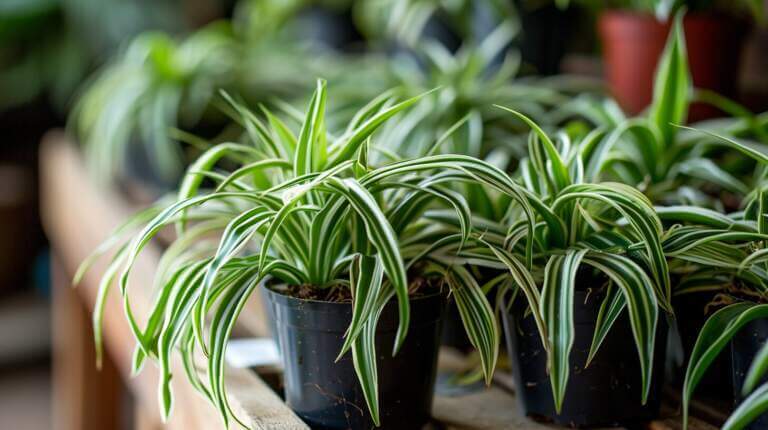
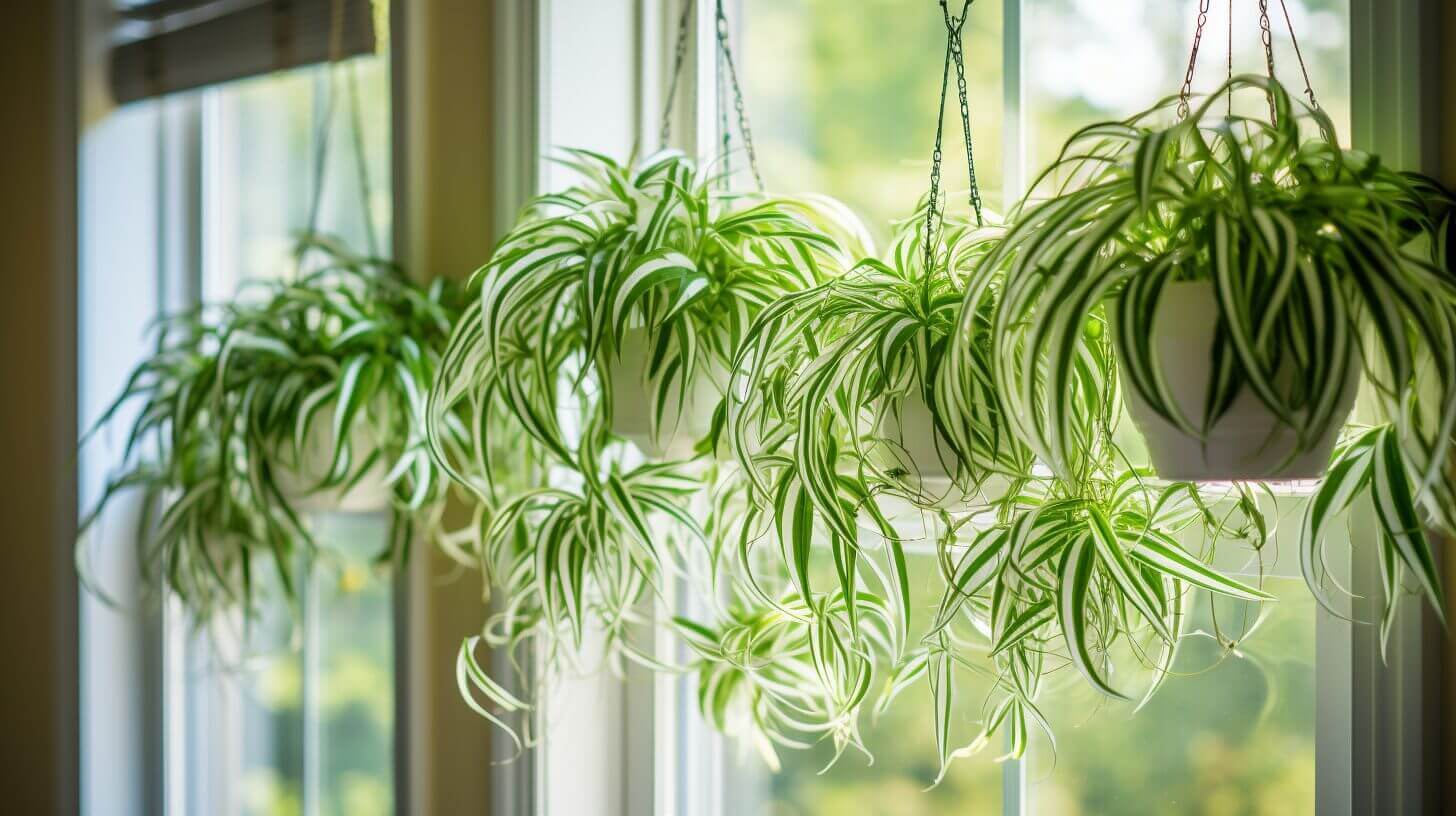
A mature spider plant reaches roughly 12 to 18 inches tall and 12 to 24 inches across, with individual leaves 8 to 18 inches long. Once it starts throwing runners, the whole display can span three feet or more, though that is the plantlets hanging rather than the plant itself getting bigger.
Most reach full size in one to two years, which is fast for a houseplant.
Size at a Glance
| Measurement | Typical mature size |
|---|---|
| Height of the foliage clump | 12 to 18 inches |
| Spread of the clump | 12 to 24 inches |
| Individual leaf length | 8 to 18 inches |
| Total span including hanging runners | 3 feet or more |
| Time to reach mature size | 1 to 2 years |

Variegated forms tend to stay slightly smaller than the plain green ones, because the white or cream sections contain no chlorophyll and contribute nothing to growth. An all-green spider plant in the same conditions will usually outgrow its variegated neighbor.
The Repotting Trap
Here is the part that catches people who want a bigger plant.
Spider plants produce their runners and plantlets most reliably when they are slightly pot-bound. A plant with a little root restriction reads it as a signal to reproduce. Give it a large pot with plenty of room and it will happily spend a year or two growing roots and leaves instead.
So repotting into a much bigger container to encourage growth often does the opposite of what people want. You get a larger root system and a fuller clump eventually, but you can lose a season of babies to get it. If the plantlets are the point, leave it snug.
The roots themselves are worth knowing about. Spider plants form thick, fleshy, tuber-like roots that store water, and they fill a pot aggressively. It is not unusual for an established plant to crack a rigid plastic pot or push the whole root ball up above the rim. That is normal rather than an emergency, though it is a clear sign it is time to size up or divide.

What Actually Makes One Grow Faster
Light, first and by a distance. Spider plants tolerate low light but they do not grow in it. Bright indirect light produces noticeably faster growth, more plantlets and tighter, sturdier leaves. A plant in a dim corner stays sparse and floppy no matter what else you do for it.
Feed it during the growing season. A balanced liquid houseplant fertilizer at half strength every two to four weeks through spring and summer supports the growth rate these are capable of. Stop in autumn and winter.
Water consistently. The tuberous roots buy real drought tolerance, so a spider plant survives being forgotten, but survival is not growth. Steady moisture with the top inch drying between waterings produces the best rate.
Keep it warm enough. Growth slows markedly below about 60 degrees Fahrenheit. Ordinary room temperature is fine.
Remove runners if size is the goal. Every plantlet is fed by the parent. Cutting the runners at the base sends that energy back into leaves and roots, and it is the fastest way to bulk up a young plant.
Why Yours Might Have Stalled
- Not enough light. The most common reason by a wide margin.
- Feeding lots of plantlets. A parent supporting many babies grows slowly itself, which is normal and not a problem to fix unless you want it bigger.
- Severely rootbound. Slightly snug encourages plantlets, but a solid mass of roots with no soil left cannot support growth. Water running straight through in seconds is the tell.
- Winter. Growth genuinely pauses. Nothing is wrong.
- Brown tips from fluoride. Damaged leaf tips do not regrow, so the plant looks static even while producing new leaves from the crown.
Frequently Asked Questions
How long does a spider plant take to reach full size?
One to two years in decent light, longer in dim conditions. They are among the faster common houseplants.
Do spider plants get bigger in bigger pots?
Eventually, yes, but at the cost of plantlets in the meantime. Pick which one you actually want before sizing up.
How big do the leaves get?
Usually 8 to 18 inches. Consistently short leaves normally point to light rather than to anything wrong with the plant.
Why is my spider plant not making babies?
Most often it is too young, in too much pot, or in too little light. Plantlets tend to arrive once a plant is mature and slightly root-restricted.
Can I keep it small on purpose?
Yes. Leave it in the same pot, divide it when it gets congested, and it will hold roughly its size indefinitely.
Do variegated spider plants grow more slowly?
Slightly. Less chlorophyll means less energy production, so all-green forms usually grow a little faster and larger.
The Short Version
Expect 12 to 18 inches tall and up to two feet across, plus whatever the runners add, reached within about two years. Light is what governs the rate, feeding helps through summer, and cutting the runners redirects energy into the parent. And if you want plantlets, resist the urge to move it into a bigger pot, because a slightly snug spider plant is a productive one.